Homeopathy
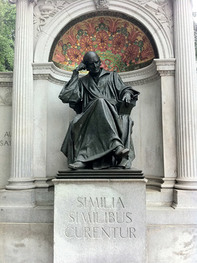
Homeopathy is a system of medicine created about 200 years ago by an unusual genius named Samuel Hahnemann. A statue of Hahnemann stands in Washington DC in Scott Circle, at the intersection of Massachusetts Ave, Rhode Island Ave, and 16th St, shown in the picture on the this page. Homeopathy uses diluted natural substances to stimulate and re-balance people's own healing systems. This approach is analogous to allergy shots, which are commonly used in conventional allergy treatment. However, homeopathy uses oral pellets or drops instead of shots, and can be used to help the body handle any issue, not only allergies. A good website introducing homeopathy, which includes practical information as well as basic research, is the American Association of Homeopathic Pharmacists: What is Homeopathy.
For those interested in more detailed research summaries a European group of researchers published a long list of published research articles of which Wikipedia seems blissfully unaware: Research Summary. Two good books on homeopathy that are interesting and informative are Impossible Cure by Amy Lansky which includes stories from her own family as well as research summaries, and Homeopathic Revolution: Why Famous People and Cultural Heroes Choose Homeopathy by Dana Ullman, which describes many historical figures as well as some modern ones.
Unfortunately Wiki-censor-pedia has become heavily biased against homeopathy and other innovative areas of science, and reads more like propaganda. However, encyclopedia.com still has an informative and fair page with good basic information.
For those interested in more detailed research summaries a European group of researchers published a long list of published research articles of which Wikipedia seems blissfully unaware: Research Summary. Two good books on homeopathy that are interesting and informative are Impossible Cure by Amy Lansky which includes stories from her own family as well as research summaries, and Homeopathic Revolution: Why Famous People and Cultural Heroes Choose Homeopathy by Dana Ullman, which describes many historical figures as well as some modern ones.
Unfortunately Wiki-censor-pedia has become heavily biased against homeopathy and other innovative areas of science, and reads more like propaganda. However, encyclopedia.com still has an informative and fair page with good basic information.